American Rescue Plan Act - Los Angeles County Office of Violence Prevention
$25 Million in Funding for Trauma Prevention
The American Rescue Plan Act (ARPA), Trauma Prevention Partnerships (TPP), provided funding to community-based organizations to promote peace and healing in communities disproportionately impacted by violence across LA County. This initiative was implemented between January 2023 and May 2025.
The Department of Public Health (DPH), Los Angeles County Office of Violence Prevention (OVP) received $25 Million in ARPA funds, as part of the County’s COVID-19 recovery plan, to implement Trauma Prevention Partnerships. The Biden administration allocated ARPA funds to state and local governments, to support communities that have been historically disadvantaged and have experienced disproportionate impacts from the pandemic. Click here for more information about the County’s plan for ARPA dollars.

Trauma Prevention Partnerships are rooted in an equity framework
OVP's TPP project is being implemented with an equity framework. Due to historical oppression, racism and discrimination, people of color are often not provided the same opportunities and resources needed for individuals, including youth and families, to thrive. This investment provides an opportunity to support communities and individuals disproportionately impacted by violence tied to oppression and racism. Ideal grantee partners will demonstrate how their work is inclusive of an equity framework and survivor centered approaches to advance peace and healing. It is our intention, to the best of our ability, to ensure that as many community members and stakeholders as possible are informed of TPP opportunities for funding, and to support the ability of all agencies, including small, grassroots organizations to apply and receive funding.
TPP will build on current strategies implemented by OVP and align with priorities that were defined in the OVP Strategic Plan. This includes evidence-based, innovative, and promising practices that are place based, community-driven, and culturally relevant to address multiple forms of violence. Funding will be prioritized for communities in Los Angeles County with the highest rates of ongoing violence and violence exacerbated by the COVID-19 pandemic, and support healing for non-geographically concentrated populations impacted by multiple forms of violence.
Funding Opportunities for Community-Based Organizations
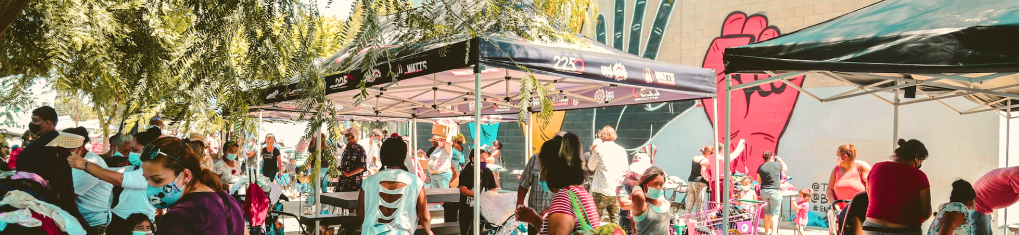
Trauma Prevention Partnerships Provided 56 Grants to 43 Community Organizations
OVP contracted with a third-party administrator, California Community Foundation (CCF), to manage disbursement of funding to community-based organizations for TPP. A Request for Proposals were released for seven strategies, and a total of 56 grants were awarded to 43 organizations. Additionally, a Hardship Fund was accessible to all grantees:
- Crisis Response
- Peer-to-Peer Learning Academy
- Youth Programs
- Trauma Informed Care/Community Healing
- Community Hospital Violence Intervention Program (HVIP)
- School Safety Transformation
- Street Outreach and Community Violence Intervention
Grantee Support
OVP worked closely with CCF to provide wraparound support and technical assistance to all grantees. This included support for invoicing, budgeting, and innovative approaches to sustainability and organizational growth. OVP’s Trauma Prevention Initiative consultation to ARPA funded agencies and communities on best practices and proper protocols for community violence intervention work.
TPP provided peer-led brown bag workshops for community-based organizations on topics such as: nonprofit engagement with government, effective community intervention worker (CIW) onboarding, the A.I. technology landscape, and capabilities and strategies for nonprofits. TPP also hosted peer learning convenings aligned with each strategy. The convenings brought OVP, CCF, and TPP awardees together for each strategy to offer resources, opportunities for collaboration and networking, and provided spaces to discuss best practices for their strategy.
 TPP's contracted evaluator, Loyola Marymount University (LMU), Psychology Applied Research Center (PARC), assisted grantees with tools and office hours to support their evaluation activities.
TPP contracted with Social Good Solutions to provide community engagement support, connecting ARPA agencies to key stakeholders and coalitions to help build a coordinated approach to providing services to these priority communities.
Social Good Solutions conducted listening sessions to obtain feedback from community stakeholders and grantees. Click here to read the report.
TPP also contracted with a media firm to produce two videos highlighting the project.
Evaluation
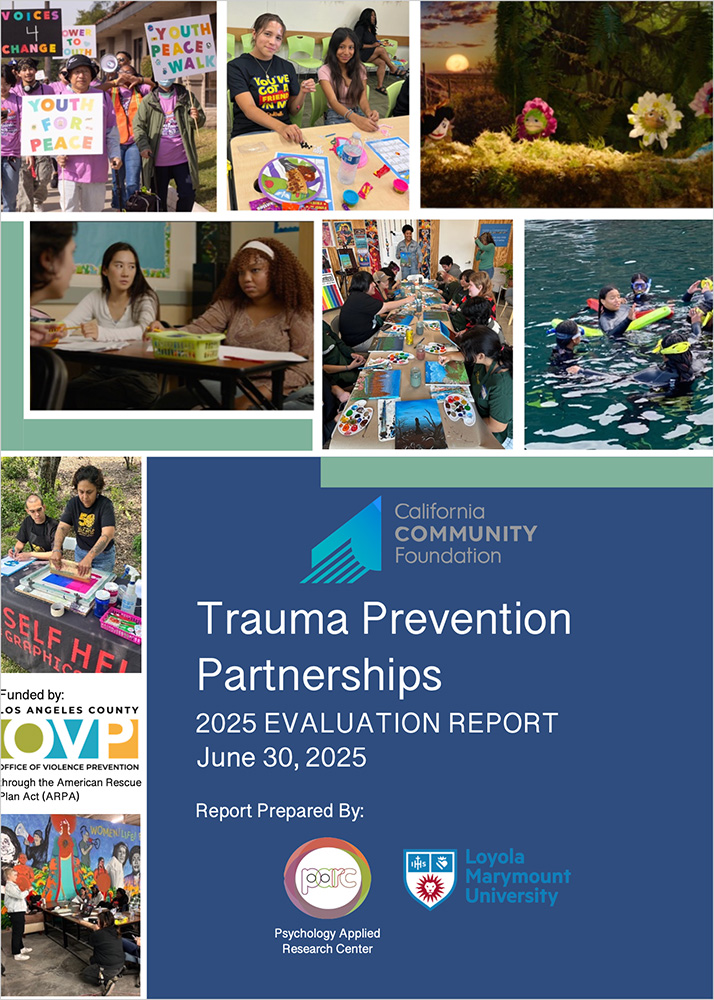 Loyola Marymount University was contracted to conduct an evaluation of TPP strategies between January 2023 and December 2024. Highlights are listed below. For detailed methodology, analysis, and final outcomes, please click here to view the full report.
- 12,220 community members received direct services
- 35 agencies were able to leverage funds to expand programs
- 12 agencies launched new programs
- 3 replicated existing violence prevention programs
- 757 families were supported/assisted through ARPA Hardship fund
LMU also created profiles of each of the grantees [here].
OVP continued to collect and aggregate grantee data covering work completed between January and May 2025. Data for the School Safety Transformation pilot and Peer to Peer Academy are highlighted below.
Stories
School Safety Transformation Pilot
A safe and welcoming school environment fosters a sense of belonging and empowers students to reach their full potential. Yet in 2021, 13% of Los Angeles Unified School District (LAUSD) high school students reported missing school because they felt unsafe either on campus or on their way to or from school. Between 2021 and 2023, 24% of 7th graders in Los Angeles County (County) reported fear of being beaten up at school, while 15% of 9th graders reported suicidal ideation.
On July 12, 2022, the County Board of Supervisors (Board) passed a motion, "Enhancing School District Capacity for Student Safety", directing the Department of Public Health (Public Health) and OVP to collaborate with County departments, school districts, community organizations, and other stakeholders to develop recommendations to improve how County departments support school districts to promote student safety and well-being. One of the key findings emphasized the need for a collaborative approach to ensure schools are not only physically safe but also emotionally supportive and conducive to the holistic well-being of both students and staff. Additionally, investing in community-based organizations (CBOs), offers a trauma-informed approach to improve campus safety and address broader community factors that influence school climate. With trusted relationships in the communities they serve, CBOs are uniquely positioned to engage disconnected students and families, leverage additional resources, and implement restorative practices on campus that reduce contact with the criminal justice system.
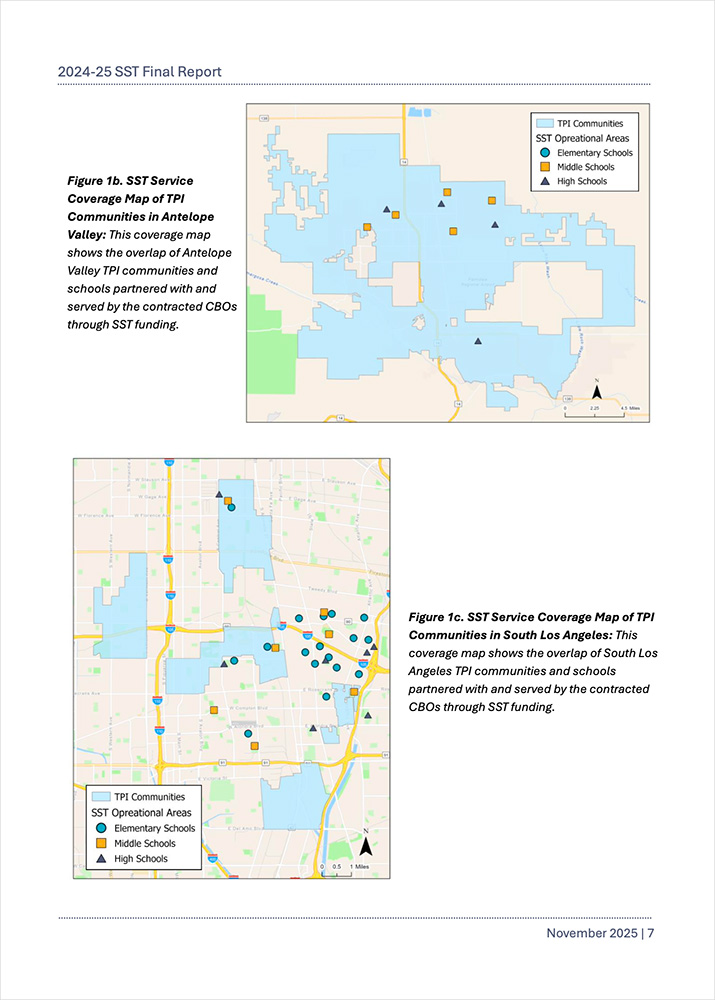 Through ARPA funds, five CBOs were each awarded $1 million to implement holistic safety strategies and student-centered programs to prevent violence and intervene in instances of violence in partnership with school districts in communities experiencing the highest rates of violence in the County. Additionally, OVP implemented a school safety learning community in partnership with the LA County of Office of Education (LACOE) to provide peer learning opportunities with a broader group of school districts. Click here to read the School Safety Transformation Pilot report.
- These partnerships helped to transform the educational ecosystem—by working at the intersection of school, family, and community, these partnerships created environments where young people were safe, supported, and empowered.
- 1,900 students directly engaged in programs, workshops, and leadership opportunities provided by grantee agencies.
- 165 school staff and community members trained by agencies in in restorative justice, student and family engagement, and trauma-informed practices.
- 110 families engaged with wraparound support.
- 5,000 safe passage walks provided by community ambassadors—creating consistent, secure routes to and from school.
Peer2Peer Academy
 The LA County Peer 2 Peer (P2P) Academy was a pilot to develop recommendations for a training academy to support LA County OVP’s violence prevention and intervention initiatives. The Academy was designed to build infrastructure for community-based organizations to sharpen skillsets for their peer workforce, and to support career pathways for this industry. The Collective for Community Based Public Safety was contracted to lead the P2P Academy and built capacity across a multi-disciplinary cohort of peer specialists to promote peace and healing.
The P2P Academy included multiple modules, such as industry standards and best practices for community violence intervention certification and a holistic mix of training topics to address the evolving needs of the field. These included gender-based violence, positive youth development, trauma informed and healing centered practice, communication, de-escalation and conflict mediation skills, field safety, group facilitation, decision-making, and system navigation. Administrative topics were integrated in the curriculum such as supervision skills, data collection and documentation, and other topics. There were 25 graduates on Friday, November 22, 2024, from the first cohort of students. Supportive family, friends, and colleagues attended the graduation.
Hardship Fund
A Hardship Fund was created to allow TPP grantees to financially address urgent client needs. A total of 757 families received financial assistance from the Hardship Fund.
STORY #1 | In the spring of 2024, a distressed parent reached out seeking urgent support due to a surge in violent crime in their neighborhood, prompting the family to begin searching for a new home. That search became even more urgent when the family’s home was robbed at gunpoint. The intruders broke the door down and forced the family to lie face down on the floor while they robbed them of their possessions, including their electronics and cars. The mother hesitated to call the police because she was afraid the intruders might still be nearby or might even return to their home. However, the family found the courage to call the police and report the crime. Following the break in, the family replaced their door and vehicle. The car was a total loss due to having most of its components, seats and headlights taken off. The emotional toll of this traumatic experience weighed heavily on the family. While the family turned to their local church and counseling for support, they continued to live in fear and uncertainty, worried that such violence could happen again. Fortunately, they were able to find a new home and with ARPA’s support, they received assistance with their first month’s rent, helping them take an important step toward rebuilding their lives.
STORY #2 | A young mother and survivor of human trafficking escaped her trafficker with her children. To ensure the safety of herself and her children, the mother needed to move into a new apartment. However, she owed back rent to the landlord. With TPP’s support, she was able to obtain the funds needed to find safe and secure housing for her children.
STORY #3 | After witnessing his father getting shot and killed, a young person reached out to TPP for support. His father had been the breadwinner of the home and his sudden death left the family struggling to make ends meet. The family fell behind on rent and faced the threat of housing instability. With TPP’s assistance, they found the support needed to begin rebuilding their lives following an unimaginable loss.
STORY #4 | A young man who lived in a gang neighborhood was approached by a gang member who asked his affiliation to other gangs in the community. When he denied gang activity involvement he was shot. He was scheduled for an interview when the incident happened. Due to the lack of employment or financial resources he couldn’t purchase necessities for the interview. The Hardship fund assisted the young man with resources for his interview and medical needs from being shot.