Trauma Informed Care - Learning Resources

Definitions & Terminology
The following resources are available to learn more about trauma and trauma informed care. Please read, use, and share them with others at home, at school, in the workplace, and in your community.

Trauma
A person's response to something (an experience, a sensation, an event) that is distressing, disturbing, or life-threatening.
Trauma Informed Care
A perspective and behaviour shift rooted in the understanding and consideration of the pervasive nature of trauma. TIC is when we engage with each other or treat someone in a manner that promotes an environment of healing and recovery rather than practices and services that may inadvertently cause or re-traumatize. Trauma informed care is rooted in the following principles: Safety; Trustworthiness and Transparency; Collaboration and Mutuality; Peer Support; Empowerment, Voice, and Choice; Addressing Cultural Historical and Gender Issues. (SAMHSA)
For our full Trauma Glossary, please click here.
Signs of Trauma
- Sweating or shivering
- Physical sensitivity
- Shortness of breath
- Muscle tremors
- Easily startled
- Sudden outburts of anger or rage
- Restlessness
- Difficulty concentrating
- Sensory sensitivity
- Increased heartbeat, blood pressure
- Feeling foggy, blurry, floaty
- Detachment
- Hypersensitivity
- Feeling unreal (depersonalization)
- Emotional fragility
- Extreme fatigue or exhaustion
- Nausea/stomach ache
- Flashbacks
Grounding Techniques
Grounding exercises are short activities that can help us manage intrusive thoughts when we are reminded of our traumatic experiences. The purpose of doing a grounding exercise is to bring us to the present moment and to distance ourselves from the negative thoughts, memories, or flashbacks.
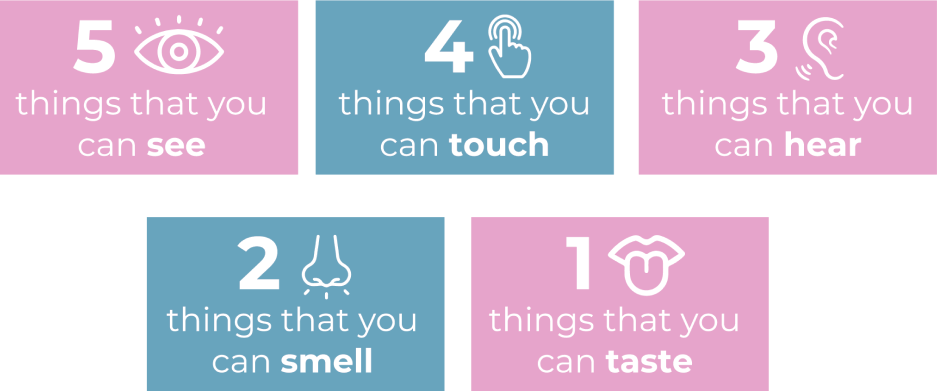
The 5-4-3-2-1 Grounding Technique
Calming Techniques
When we become triggered. It is important to bring ourselves back into the present so that we can remember that we are safe and not back in the past. This is where grounding techniques can come in handy. They can be used on anyone who is feeling triggered, including yourself!
Grounding exercises are short activities that can help us manage disturbing or upsetting thoughts when we are reminded of our traumatic experience. Below are different grounding techniques:
- Drink a glass of water
- 4-7-8 breathing:
Breathe in for 4 seconds. Hold the breath for 7 seconds. Exhale for 8 seconds. Repeat. - Five-finger breathing:
Hold one hand in front of you, with your fingers spread out. Trace the outside of your entire hand with the index finger on your other hand, taking your time, and breathing in when you trace up a finger, then out when you trace down. - Count backward by 3:
Slow your racing thoughts by counting backwards by three in your mind from 100 (100, 97, 94, etc). - 5-4-3-2-1 Grounding Technique:
Notice 5 things you can see, 4 things that you can touch, 3 things that you can hear, 2 things that you can smell, and 1 thing that you can taste. - Engage in a creative practice:
Write in a journal, play with clay, paint, collage. What you make doesn't have to be good! Just enjoy the process.
Toolkit
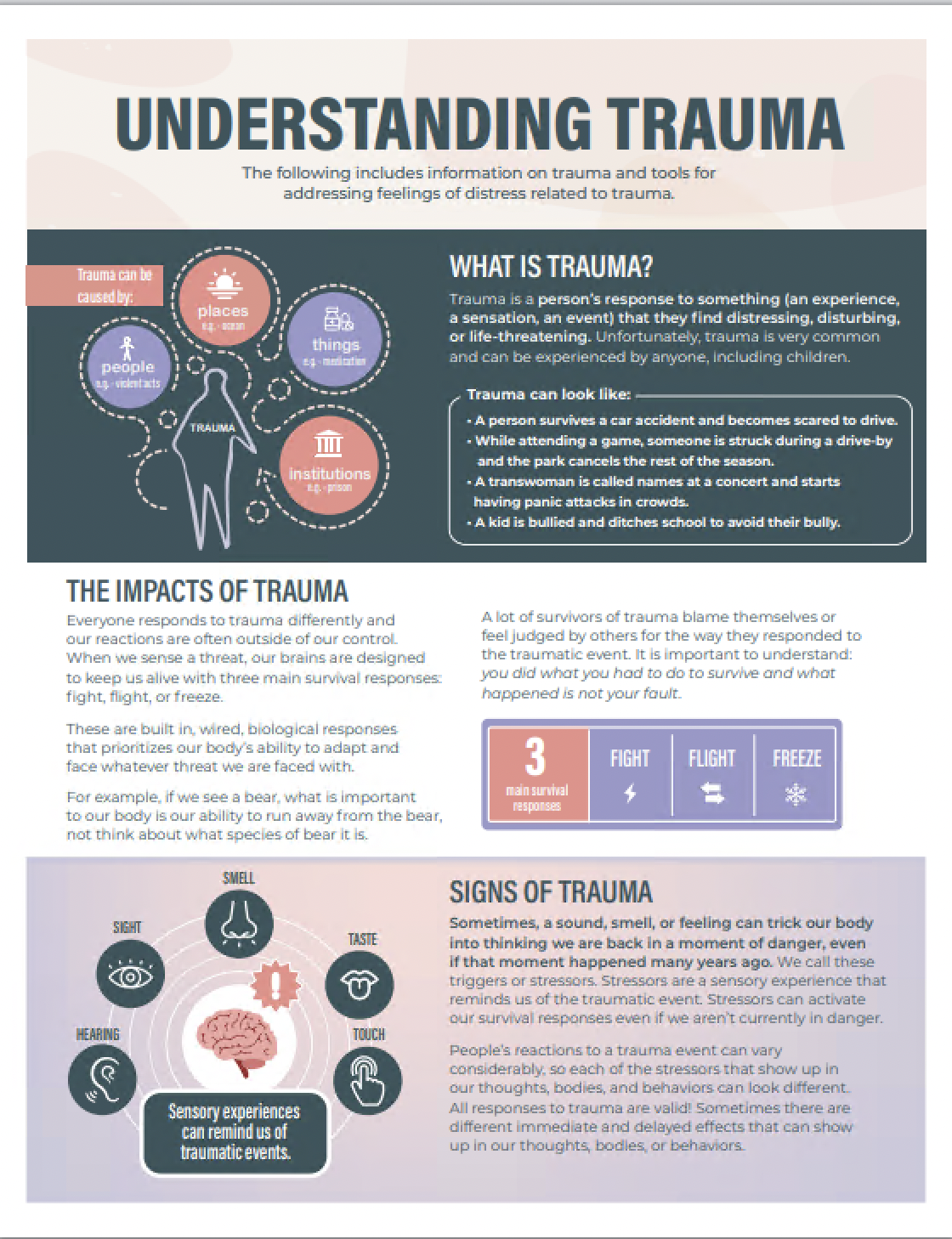
Understanding Trauma
The following includes information on trauma and tools for addressing feelings of distress related to trauma.
To download, click the language you prefer:
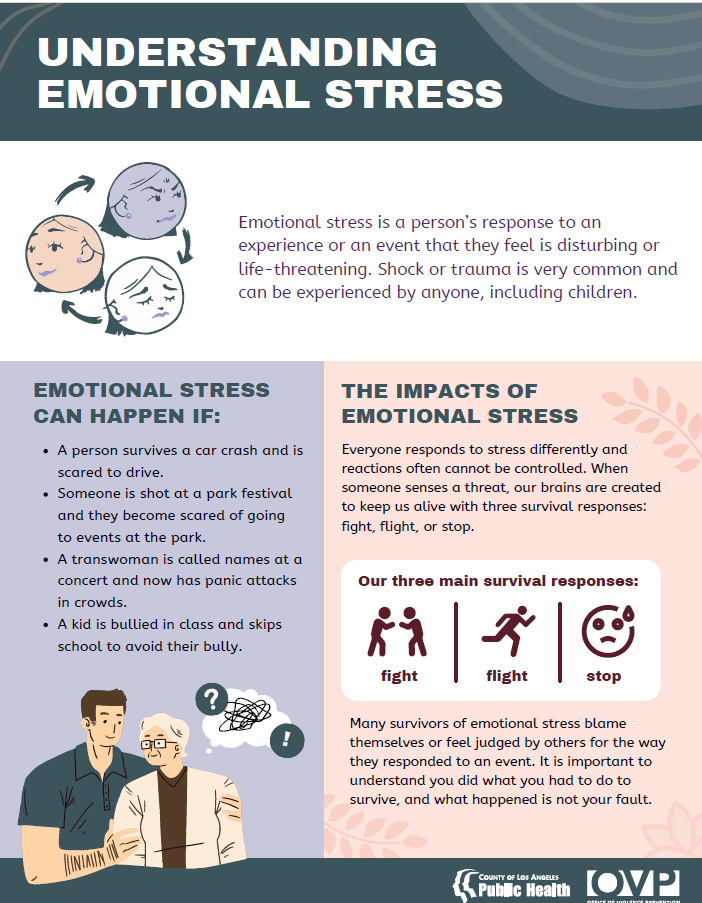
Understanding Emotional Stress
The following includes information on trauma and tools for addressing feelings of distress related to trauma.
To download, click the language you prefer:
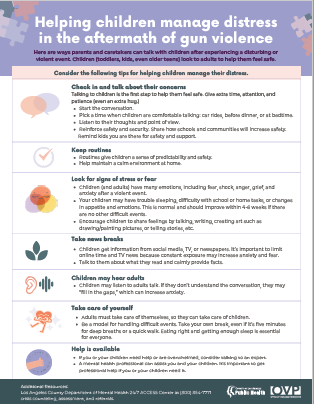
Helping Children Manage Distress in the Aftermath of Gun Violence
Here are ways parents and caretakers can talk with children after experiencing a disturbing or violent event. Children (toddlers, kids, even older teens) look to adults to help them feel safe.
To download, click the language you prefer:
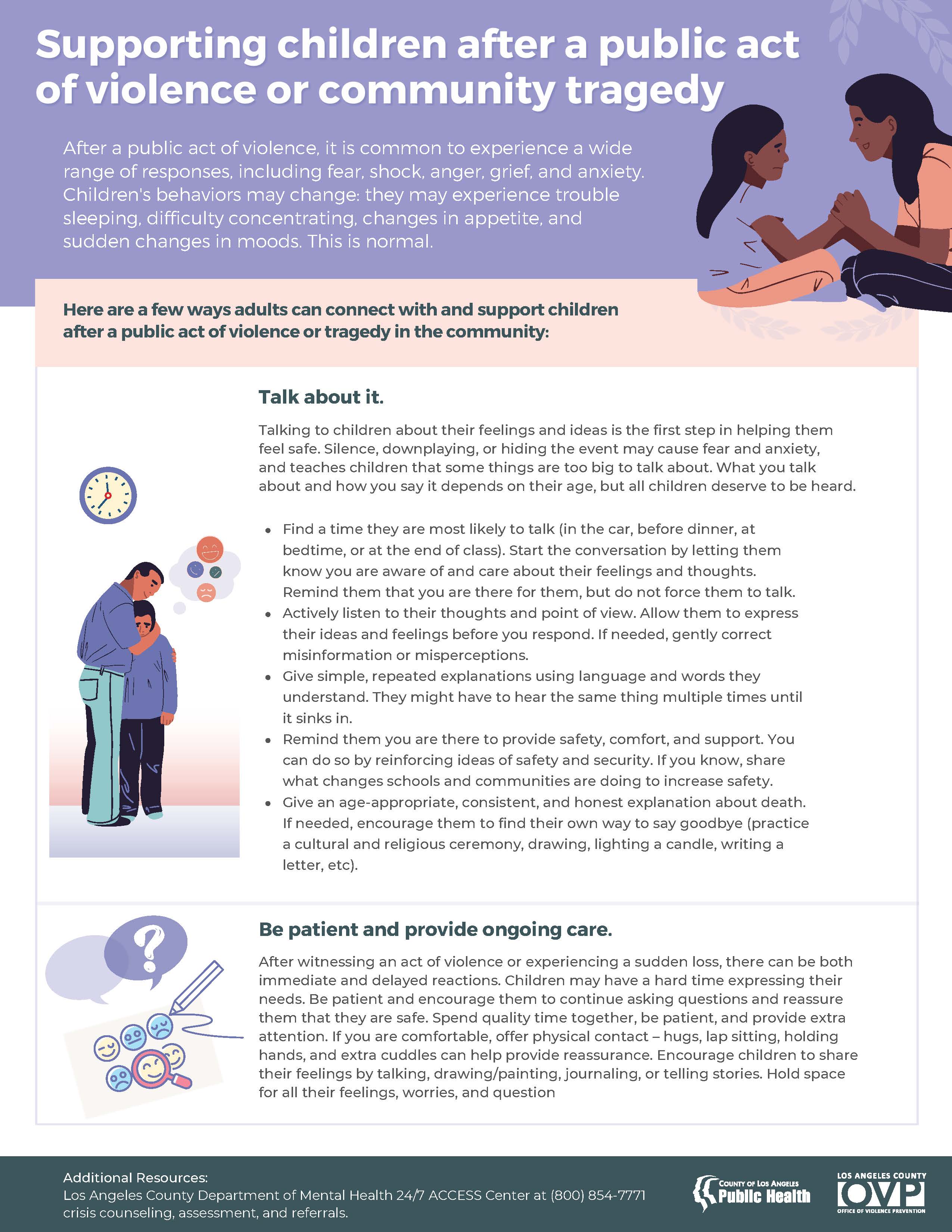
Supporting Children After A Public Act Of Violence Or Community Tragedy
After a public act of violence, it is common to experience a wide range of responses, including fear, shock, anger, grief, and anxiety. Children's behaviors may change: they may experience trouble sleeping, difficulty concentrating, changes in appetite, and sudden changes in moods. This is normal. Learn how adults can connect with and support children after a public act of violence or tragedy in the community.
To download this resource, click here.
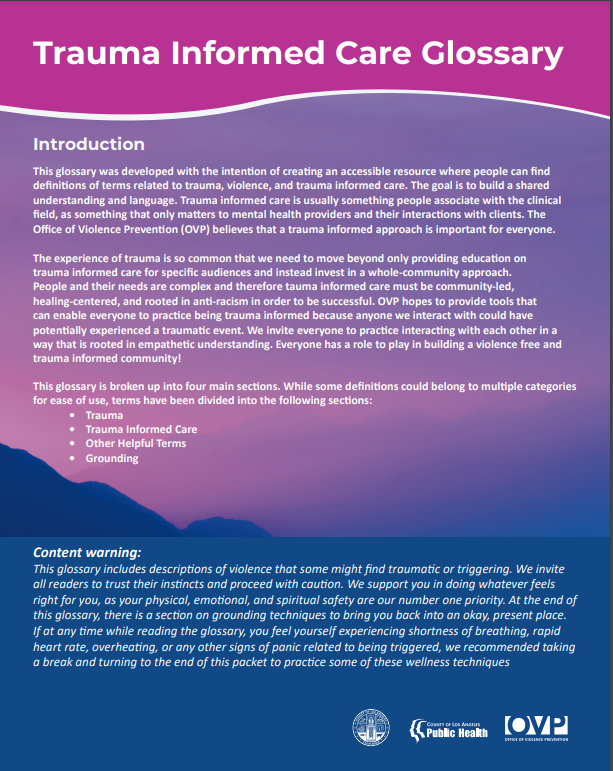
Trauma Informed Care Glossary
This glossary was developed with the intention of creating an accessible resource where people can find definitions of terms related to trauma, violence, and trauma informed care. The goal is to build a shared understanding and language. Trauma informed care is usually something people associate with the clinical field, as something that only matters to mental health providers and their interactions with clients. The Office of Violence Prevention (OVP) believes that a trauma informed approach is important for everyone.
Download the Trauma Glossary: English | Spanish
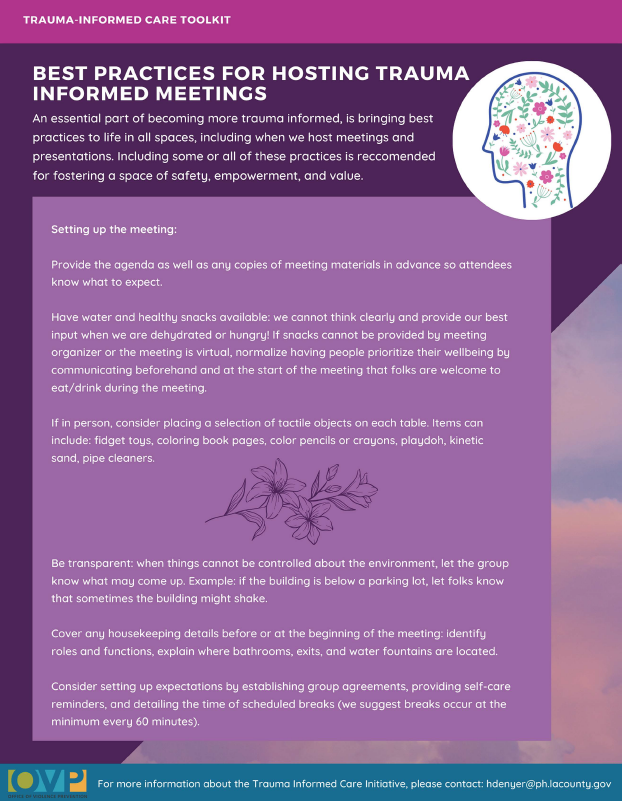
Best Practices for Hosting Trauma Informed Meetings
An essential part of becoming more trauma informed, is bringing best practices to life in all spaces, including when we host meetings and presentations. Including some or all of these practices is recommended for fostering a space of safety, empowerment, and value.
Download: Hosting Trauma Informed Meetings
NHS Lanarkshire EVA Services - Trauma and the Brain: Understanding Abuse Survivors' Responses.
For more information, please contact Hannah Denyer (she/her), Trauma Informed Care Specialist at ovp@ph.lacounty.gov